
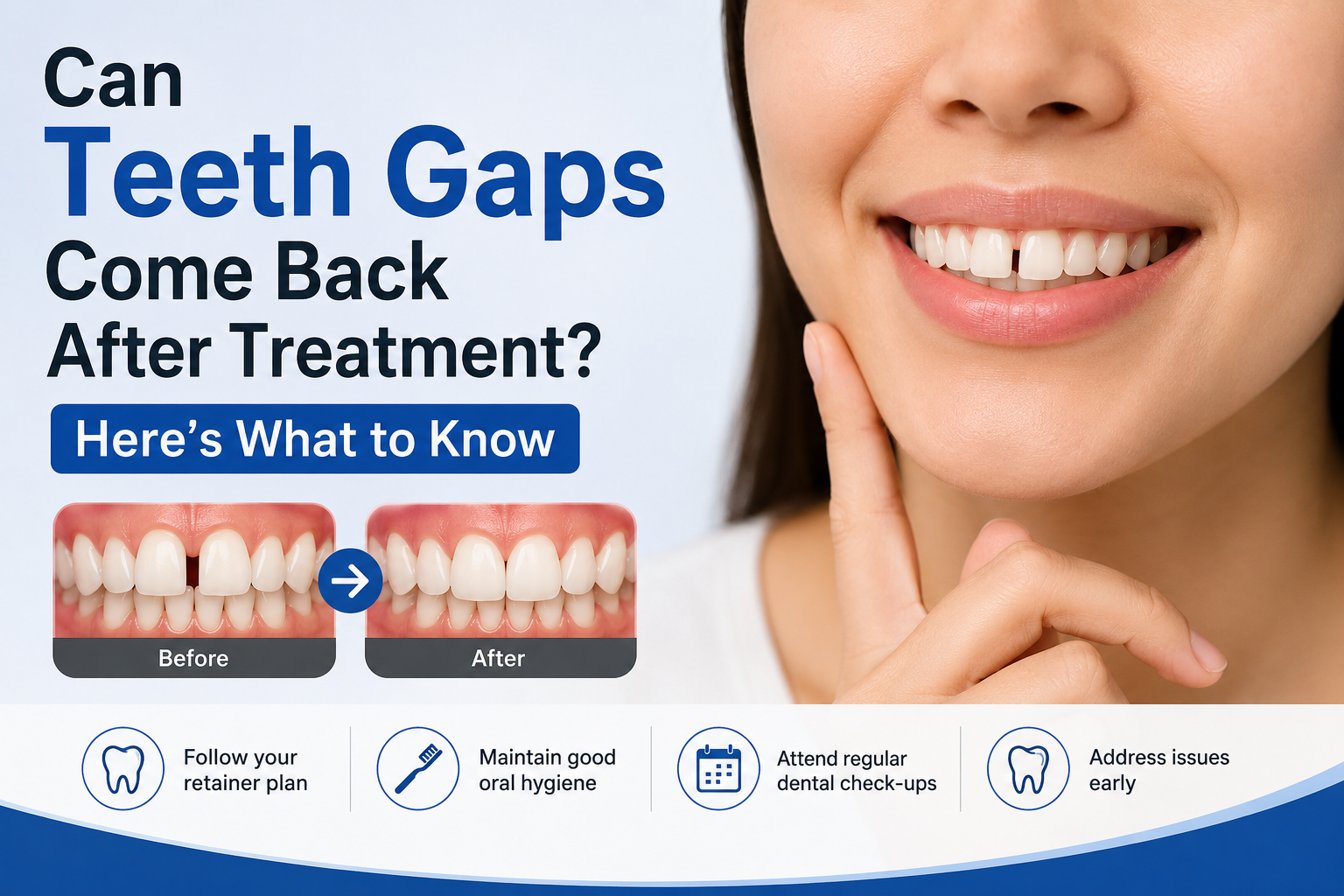
Closing a gap between teeth can create a more balanced and confident smile. However, some people notice that a previously closed space slowly starts appearing again. This can be frustrating, especially after completing orthodontic or cosmetic treatment.
The good news is that teeth moving after treatment is not unusual, and there are ways to reduce the chances of spacing returning. Understanding why teeth gaps come back and following the right aftercare can help protect your results.
Why Can Teeth Gaps Come Back?
Teeth are not permanently fixed in one position. They can respond to pressure from the tongue, lips, cheeks, and surrounding tissues. Changes in the bite, gum health, jaw, or everyday habits may also affect tooth position.
One of the most common reasons for returning spacing is inconsistent retainer use. After orthodontic treatment, retainers help keep teeth in their new positions while the surrounding tissues adapt.
Other possible factors include:
- Natural tooth movement with age
- Changes in the bite
- Gum disease or reduced gum support
- Missing teeth
- Tongue-thrusting habits
- Pressure from surrounding teeth
- Not following the recommended retention plan
The underlying cause can vary from person to person, so a dental evaluation is important when a gap begins to return.
Does Closing a Gap Guarantee Permanent Results?
No dental treatment can guarantee that teeth will never move again. Long-term stability depends on the original cause of the spacing, treatment method, oral health, and post-treatment care.
For patients considering Teeth Spacing Treatment in HSR Layout, treatment planning should involve more than simply making a visible gap disappear. The dentist may evaluate tooth position, bite, gums, and surrounding structures to understand why the space developed.
This approach can help create a treatment plan focused on both appearance and dental function.
Why Are Retainers Important?
Retainers are one of the most important parts of maintaining orthodontic results. Depending on the case, a dentist or orthodontist may recommend a removable retainer, fixed retainer, or both.
The wearing schedule can differ between patients. Some may need to wear their retainers more frequently at first and then transition to a longer-term maintenance routine.
If your retainer feels unusually tight or no longer fits properly, avoid forcing it into place. Instead, consult your dental professional. Addressing tooth movement early may help prevent the gap from becoming more noticeable.
What If the Gap Has Already Returned?
A returning gap does not necessarily mean that the complete treatment has to be repeated. The appropriate solution depends on how much the teeth have moved and what caused the movement.
For a minor change, a dentist may recommend monitoring or a new retainer. If the movement is more significant, orthodontic treatment may be considered. In selected situations, cosmetic dental procedures may also be an option when the concern is primarily related to appearance.
Patients exploring Teeth Gap Closure in HSR Layout should have the area examined before choosing a treatment. A professional assessment can determine whether the spacing is related to tooth movement, gum health, missing teeth, or another concern.
Can Clear Aligners Correct a Reopened Gap?
Clear aligners can help correct certain types of tooth movement and spacing. They use a series of customised trays to apply controlled pressure and gradually guide teeth toward planned positions.
However, aligners are not suitable for every case. The dentist may consider factors such as the amount of spacing, bite, gum condition, tooth position, and overall oral health.
Dr. SS Dental Care’s clear aligner treatment can be considered by patients looking for a discreet approach to correcting certain alignment concerns.
For people considering Teeth Gap Closure in HSR Layout, a consultation can help determine whether clear aligners or another approach is appropriate.
How Can You Prevent Gaps From Returning?
Following your retention plan is one of the most important steps. Keep retainers clean, use them according to your dentist’s instructions, and attend recommended follow-up appointments.
Good oral hygiene is also essential. Healthy gums provide support around the teeth, while untreated gum problems can contribute to changes in tooth position.
You should also pay attention to changes in your bite or tooth position. If a previously closed space starts becoming visible again, getting it checked early can make management easier.
For anyone undergoing Teeth Spacing Treatment in HSR Layout, regular dental reviews can help monitor the stability of the results and identify potential concerns at an early stage.
When Should You See a Dentist?
You should arrange a dental consultation if:
- A previously closed gap is becoming wider
- Your teeth suddenly feel loose
- Your retainer no longer fits
- You notice gum bleeding or swelling
- Your bite feels different
- New spaces appear between other teeth
At Dr. SS Dental Care, Dr. Shahul Hameed and the dental team can assess spacing and alignment concerns and discuss suitable treatment options based on individual needs. The clinic provides treatment for teeth spacing and other orthodontic concerns. You can also explore the clinic’s dedicated Teeth Spacing Treatment in HSR Layout page for more information.
Conclusion
Teeth gaps can return after treatment because teeth naturally have some ability to move over time. Retainers, healthy gums, proper oral care, and regular dental check-ups can all help maintain the results.
If you notice a gap returning, do not assume that your previous treatment has failed. An early dental assessment can help identify the reason and determine the most suitable next step.
For patients considering Teeth Gap Closure in HSR Layout, personalised evaluation is an important starting point for achieving and maintaining a healthy, well-aligned smile.
FAQs
1. Can teeth gaps reopen after braces?
Yes. Teeth can shift after orthodontic treatment, particularly when retainers are not worn according to the recommended schedule.
2. How long should I wear a retainer?
The recommended duration varies depending on your teeth and treatment. Your dentist or orthodontist can provide an appropriate retention plan.
3. Why is my front tooth gap coming back?
Possible reasons include tooth movement, inconsistent retainer use, changes in gum health, bite changes, or pressure from certain oral habits.
4. Can clear aligners close a gap that has reopened?
They may be suitable for some cases. An examination is needed to determine whether clear aligners can safely and effectively correct the movement.
5. Can adults get treatment for returning teeth gaps?
Yes. Adults can undergo evaluation and treatment for spacing, although the appropriate option depends on oral health, tooth position, bite, and the underlying cause.