
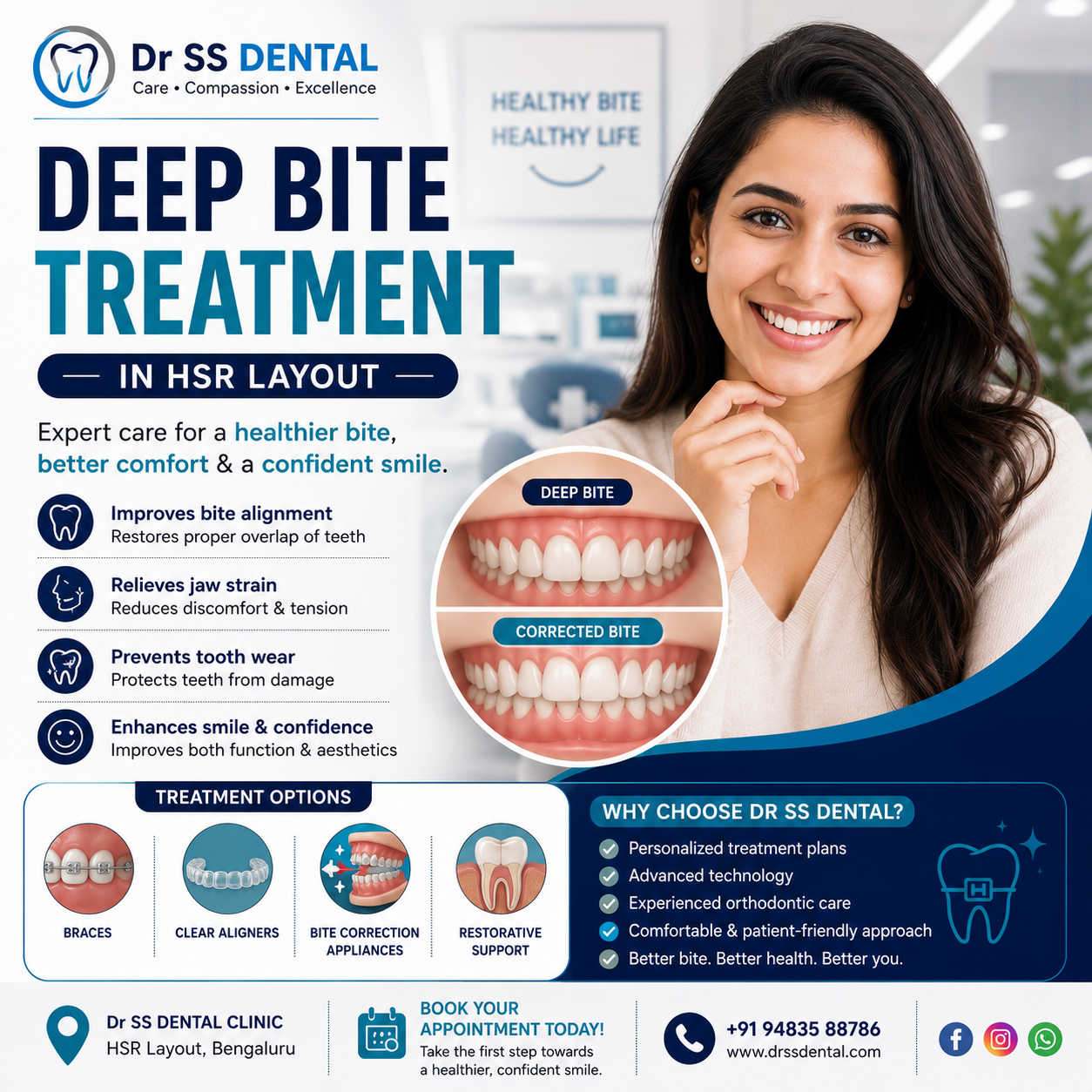
A deep bite is more than just a cosmetic concern. It can affect how you chew, speak, smile, and even how your jaw feels at the end of the day. If you are looking for Deep Bite Treatment in HSR Layout, getting the problem evaluated early can help prevent long-term dental issues and improve both function and appearance. With the right Deep Bite Correction in HSR Layout, patients can achieve a healthier bite and a more confident smile.
A deep bite happens when the upper front teeth overlap the lower front teeth too much. In some cases, the lower teeth may bite too deeply into the roof of the mouth or into the gums behind the upper teeth. This can lead to discomfort, wear on teeth, jaw strain, and speech problems. That is why timely Deep Bite Treatment in HSR Layout is important for children, teenagers, and adults alike.
What causes a deep bite
A deep bite can develop because of genetics, jaw shape, tooth position, or abnormal growth patterns. Some patients are born with a bite pattern that naturally causes excess overlap. Others may develop the issue due to missing teeth, tooth wear, or untreated orthodontic problems. In many cases, Deep Bite Correction in HSR Layout is needed not only to improve appearance but also to protect oral health.
When the bite is not balanced, the lower teeth may not function properly during chewing. Over time, this can create uneven pressure on the teeth and jaws. Patients may also notice chipped front teeth, enamel wear, difficulty biting properly, or recurring discomfort. This is why specialists offering Deep Bite Treatment in HSR Layout focus on both the visible smile and the hidden bite mechanics.
Signs you may need treatment
Some people do not realize they have a deep bite until a dentist points it out. Common signs include excessive overlap of the front teeth, worn-down front teeth, jaw discomfort, and difficulty closing the mouth comfortably. In more advanced cases, the lower front teeth may touch the gums behind the upper teeth. If you are noticing these signs, it may be time for Deep Bite Correction in HSR Layout.
A deep bite can also make the smile look shorter or more crowded. Some patients experience pain while chewing, while others notice tension in the jaw or frequent cheek biting. Since the condition can worsen over time, early Deep Bite Treatment in HSR Layout can help avoid more complicated treatment later.
Why early correction matters
When a deep bite is left untreated, it can lead to more than just cosmetic problems. Tooth wear, gum irritation, bite imbalance, and jaw discomfort can gradually increase. In some patients, the lower teeth may become damaged by repeated contact. That is why Deep Bite Correction in HSR Layout should not be delayed when the bite is clearly affecting daily comfort.
Early treatment often gives better results because teeth and jaw relationships are easier to guide when the problem is detected sooner. This is especially helpful for growing children and teenagers, but adults can also benefit from effective orthodontic treatment. Choosing the right Deep Bite Treatment in HSR Layout at the right time can make the process smoother and more predictable.
Treatment options for deep bite
Treatment depends on the severity of the bite problem, the patient’s age, and the overall condition of the teeth and jaw. In mild to moderate cases, braces or aligners may be used to gradually reposition the teeth. In more complex cases, bite correction may require a combination of orthodontic methods and restorative care. The goal of Deep Bite Correction in HSR Layout is to create a balanced bite that functions well and looks natural.
At Dr SS Dental, treatment planning may also include related dental care if needed. For example, some patients may require support from orthodontics treatment when the deep bite is linked with alignment problems. In other cases, clear dental aligners may be recommended for a more discreet approach. These options can be combined depending on the case, which makes Deep Bite Treatment in HSR Layout more personalized and effective.
Choosing the right dental clinic
Choosing the right clinic is important because bite correction requires precision, patience, and planning. A good dental team will evaluate your bite, tooth position, jaw function, and smile balance before suggesting treatment. At Dr SS Dental, the focus is on personalized care, modern techniques, and long-term results. Patients seeking Deep Bite Treatment in HSR Layout should look for a clinic that understands both function and aesthetics.
If deep bite is affecting the health of damaged teeth, related treatments such as root canal treatment or restorative care may also be part of the plan. That is why Deep Bite Correction in HSR Layout is often part of a larger treatment approach rather than a single procedure. The right specialist will explain each step clearly and help you choose the best path for your smile.
Conclusion
A deep bite can affect appearance, comfort, and long-term dental health if it is ignored. With expert Deep Bite Treatment in HSR Layout, patients can correct bite problems, protect their teeth, and improve daily function. Whether the issue is mild or more advanced, Deep Bite Correction in HSR Layout can help restore balance and confidence. If you are ready to improve your bite and smile, Dr SS Dental offers personalized treatment options designed for lasting results.
FAQs
1. What is deep bite treatment?
Deep bite treatment is an orthodontic approach used to correct excessive overlap of the upper front teeth over the lower front teeth.
2. Who needs deep bite correction?
Anyone with bite imbalance, tooth wear, jaw discomfort, or excessive overlap may need deep bite correction.
3. Is deep bite treatment painful?
The treatment is usually manageable. Some patients may feel mild pressure or discomfort during adjustment periods.
4. Can adults get deep bite treatment?
Yes, adults can benefit from deep bite correction, although treatment planning may vary based on tooth and jaw condition.
5. How long does deep bite correction take?
The duration depends on the severity of the bite problem and the treatment method used. It may take several months to a few years.