
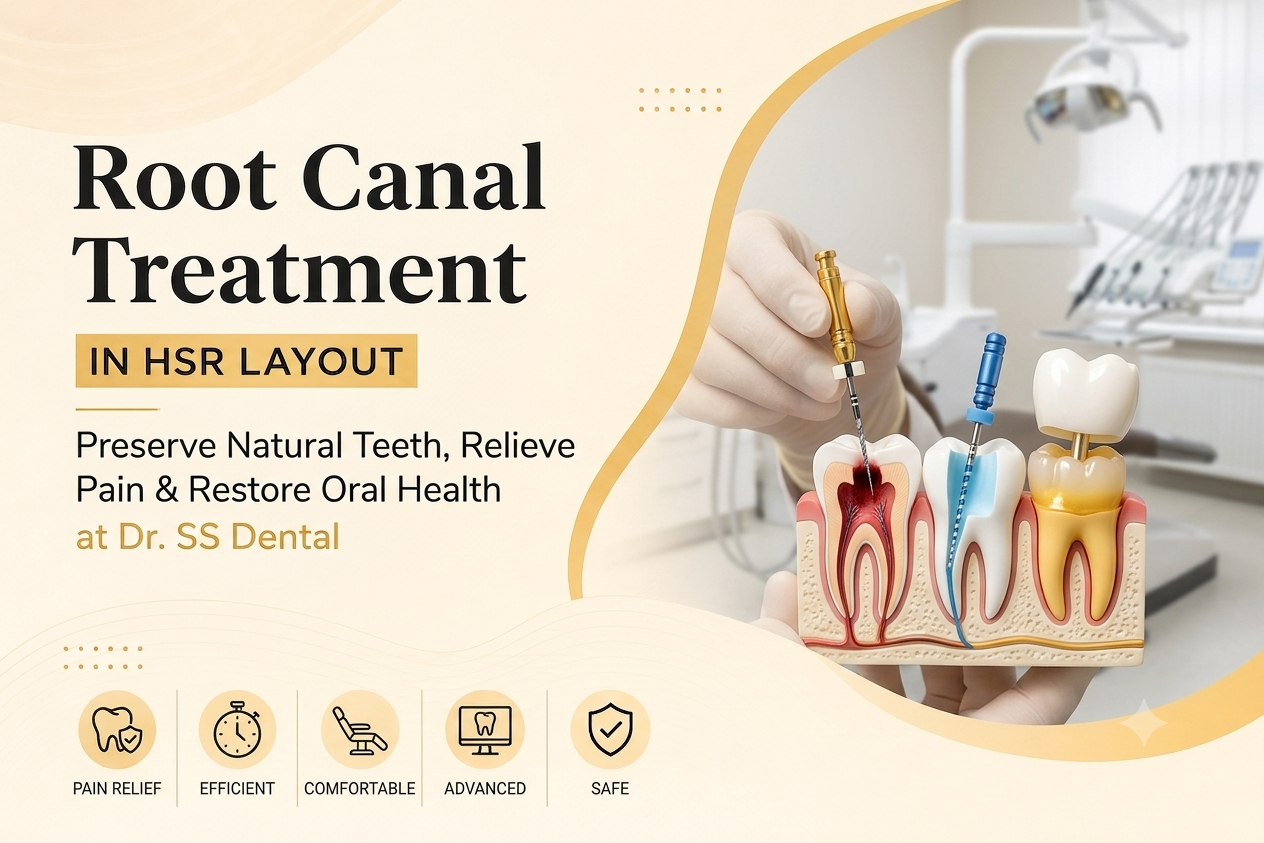
Tooth pain is one of the most common dental concerns, yet many people assume the affected tooth must be removed. Fortunately, modern dentistry focuses on preserving natural teeth whenever possible. Root Canal Treatment in HSR Layout is a reliable procedure that removes infection from within the tooth while helping save your natural smile.
Preserving a natural tooth supports comfortable chewing, maintains proper bite alignment, and prevents neighbouring teeth from shifting. Seeking timely treatment also helps stop the infection from spreading and reduces the need for more extensive dental procedures.
What Is Root Canal Treatment?
Inside every tooth is a soft tissue called dental pulp that contains nerves and blood vessels. When infected by deep decay, cracks, or injury, it can cause severe pain and sensitivity.
During Root Canal Treatment in HSR Layout, the infected pulp is removed, the canals are cleaned and sealed, and a dental crown may be placed to restore strength and protect the tooth. Modern techniques and advanced anaesthesia make the procedure comfortable for most patients.
Signs You May Need Root Canal Treatment
Recognising the symptoms early improves the chances of saving your natural tooth.
Some common warning signs include:
- Persistent toothache
- Pain while chewing or biting
- Lingering sensitivity to hot or cold foods
- Swollen or tender gums
- A darkened tooth
- Small pimple-like swelling on the gums
- Recurring discomfort in the same tooth
Ignoring these symptoms may allow the infection to worsen over time, making treatment more complicated.
Why Saving Your Natural Tooth Matters
Whenever possible, dentists aim to preserve the natural tooth instead of removing it. A healthy natural tooth functions better than any replacement and helps maintain proper alignment, jaw function, and overall oral health.
Regular dental examinations also play an important role in identifying problems before they become severe. Routine visits for General Dentistry in HSR Layout can help detect cavities and infections early, reducing the likelihood of requiring extensive treatment later.
Root Canal Treatment or Tooth Extraction?
Many patients wonder whether extraction is a quicker solution than saving the tooth.
While extraction may be necessary in certain situations, preserving the natural tooth is generally the preferred option whenever it can be successfully restored. The Best Root Canal Treatment in HSR Layout focuses on eliminating infection while maintaining the natural structure of your tooth, allowing you to continue chewing comfortably and protecting your long-term oral health.
What Happens During Root Canal Treatment?
Many people worry that root canal treatment is painful. However, with modern techniques and effective local anaesthesia, Root Canal Treatment in HSR Layout is a comfortable and efficient procedure for most patients.
Comprehensive Examination
Your dentist examines the affected tooth using digital X-rays to assess the infection and create a personalised treatment plan.
Cleaning the Infected Tooth
After numbing the area, the infected pulp is removed, and the root canals are carefully cleaned and disinfected.
Sealing and Restoring the Tooth
The canals are then sealed to prevent reinfection, and if required, a dental crown is placed to restore the tooth’s strength and function.
Benefits of Root Canal Treatment
Choosing the Best Root Canal Treatment in HSR Layout offers far more than relief from tooth pain. It helps preserve your natural tooth while restoring its strength and function.
Some of the key benefits include:
- Preserves your natural tooth
- Eliminates infection and discomfort
- Restores comfortable chewing
- Prevents neighbouring teeth from shifting
- Maintains your natural bite
- Supports long-term oral health
- Reduces the need for tooth replacement
Timely treatment also prevents the infection from spreading to nearby teeth and surrounding tissues.
Can Root Canal Treatment Be Prevented?
While not every case can be prevented, maintaining good oral hygiene greatly reduces the risk of severe tooth infections.
Simple habits that help protect your teeth include:
- Brushing twice daily with fluoride toothpaste
- Flossing every day
- Limiting sugary foods and drinks
- Visiting your dentist for regular check-ups
- Treating cavities before they become severe
Many root canal procedures result from untreated cavities. Early treatment with a Dental Filling can often stop decay before it reaches the inner pulp of the tooth, reducing the likelihood of needing more extensive treatment later.
Choosing the Right Dental Care
Successful treatment depends on accurate diagnosis, modern technology, and personalised care. When selecting a dental clinic, look for experienced professionals, advanced diagnostic equipment, strict sterilisation standards, and a patient-focused approach.
If a tooth cannot be preserved despite timely treatment, your dentist may recommend Tooth Extraction in HSR Layout as the most appropriate option. However, preserving your natural tooth through The Best Root Canal Treatment in HSR Layout is always the preferred choice whenever clinically possible.
Conclusion
Ignoring persistent tooth pain can lead to more serious dental problems over time. Seeking timely care through Root Canal Treatment in HSR Layout can eliminate infection, relieve discomfort, and help preserve your natural tooth for years to come.
If you’re experiencing ongoing tooth pain or sensitivity, don’t wait for the problem to worsen. Book your consultation with Dr. SS Dental today and discover how the Best Root Canal Treatment in HSR Layout can help restore your oral health and protect your smile.
Frequently Asked Questions
1. Is root canal treatment painful?
Modern Root Canal Treatment in HSR Layout is performed under local anaesthesia, making the procedure comfortable for most patients. The treatment is intended to relieve pain caused by infection rather than create it.
2. How long does root canal treatment take?
Most cases are completed in one or two appointments, depending on the severity of the infection and the condition of the affected tooth.
3. How do I know if I need a root canal?
Persistent tooth pain, prolonged sensitivity to hot or cold foods, swelling around the gums, pain while chewing, or a darkened tooth are common signs that indicate you should seek a dental evaluation as soon as possible.
4. What happens if I delay treatment?
Delaying treatment can allow the infection to spread, leading to severe pain, swelling, bone loss, or even tooth loss. Early treatment offers the best opportunity to preserve your natural tooth.
5. How long does a root canal-treated tooth last?
With proper oral hygiene, regular dental check-ups, and a well-fitted dental crown when recommended, a treated tooth can remain healthy and functional for many years.