
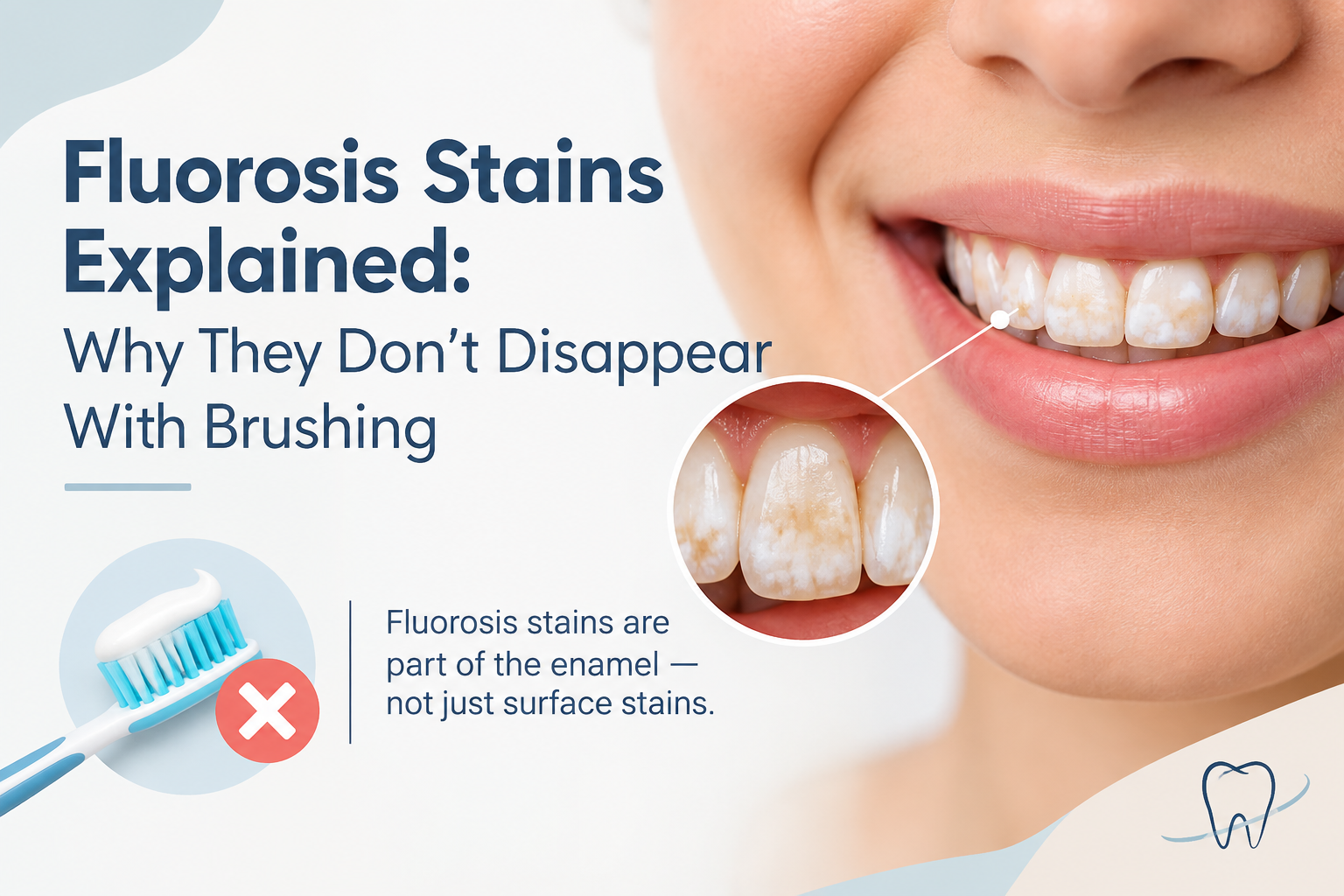
Brushing regularly is one of the most important parts of maintaining healthy teeth, but it cannot remove every type of discoloration. If you notice white streaks, cloudy patches, yellow areas, or brown marks that remain despite good oral hygiene, the cause may be related to changes within the enamel. Dental fluorosis is one such condition.
Unlike stains that develop on the outer surface of teeth, fluorosis can affect enamel while the teeth are developing. This is why dental fluorosis treatment in HSR Layout may involve professional assessment and cosmetic procedures rather than simply changing toothpaste or brushing more frequently.
What Causes Fluorosis Stains?
Dental fluorosis occurs when excessive fluoride is ingested during the period when developing teeth are forming and their enamel is being mineralized. Fluorosis can range from mild white lines or spots to more noticeable discoloration and enamel pitting.
Importantly, fluorosis develops during tooth development. Once the affected teeth erupt, they do not develop new enamel fluorosis.
The appearance can vary from person to person, which is why an examination is useful before deciding on dental fluorosis treatment in HSR Layout.
Why Can’t Brushing Remove Fluorosis?
The main reason is the location of the discoloration.
Surface or extrinsic stains can develop from foods, beverages, tobacco, and other substances that accumulate on the enamel. These stains may sometimes be reduced through brushing, professional cleaning, or appropriate whitening products.
Fluorosis is different. The discoloration is considered an intrinsic change associated with tooth development. The ADA identifies fluorosis as one cause of intrinsic tooth discoloration, meaning the appearance is not simply a removable layer sitting on the surface of the tooth.
Therefore, brushing harder will not make fluorosis disappear. Excessive brushing or abrasive products may also unnecessarily affect the enamel and gums.
How Does Fluorosis Affect Enamel?
During tooth development, enamel undergoes a complex mineralization process. Excess fluoride exposure during this stage can interfere with normal enamel formation.
Mild fluorosis may appear as faint white striations or cloudy areas. More pronounced cases can involve brown discoloration or pitting of the enamel.
Because the changes can vary in depth and appearance, dental fluorosis treatment in HSR Layout should be selected according to the individual’s enamel condition rather than using the same procedure for every case.
Can Whitening Toothpaste Remove Fluorosis?
Whitening toothpaste is primarily useful for helping remove certain surface stains. It cannot simply scrub away intrinsic discoloration associated with fluorosis. The ADA notes that whitening toothpastes designed mainly for extrinsic stain removal have limited effects on intrinsic stains.
Professional whitening may sometimes improve the appearance of certain fluorosis-related discolorations, but its effectiveness can depend on the type of stain. Brown fluorosis stains may respond differently from white fluorosis marks.
This is why professional evaluation is important before beginning dental fluorosis treatment in HSR Layout.
What Treatment Options Are Available?
Treatment depends on the severity and appearance of the fluorosis. Depending on the condition of the teeth, a dentist may consider:
- Professional teeth whitening
- Enamel microabrasion
- Dental bonding
- Dental laminates
- Veneers
The existing dental fluorosis treatment in HSR Layout service page explains that treatment can be planned according to the severity of discoloration and may include whitening, microabrasion, bonding, veneers, or laminates.
The objective is to improve the appearance of the teeth while considering the amount of natural tooth structure that should be preserved.
When Should You Consult a Dentist?
If white or brown marks remain despite regular brushing, do not assume that they are simply surface stains. A dentist can examine the enamel and determine whether the appearance is consistent with fluorosis or another cause of tooth discoloration.
For individuals considering dental fluorosis treatment in HSR Layout, an assessment can help identify the nature of the discoloration and determine which cosmetic approach may be appropriate.
Frequently Asked Questions
1. Can brushing remove fluorosis stains?
No. Fluorosis-related discoloration is associated with enamel changes that occur during tooth development, so regular brushing cannot simply remove it.
2. Is fluorosis caused by poor brushing?
No. Dental fluorosis is associated with excess fluoride exposure during tooth development, not poor oral hygiene.
3. Can whitening improve fluorosis?
It may improve certain types of fluorosis-related discoloration, but results depend on the type and appearance of the stain.
4. Can fluorosis cause enamel pitting?
More pronounced fluorosis can involve stained or pitted enamel.
5. Is professional treatment necessary for every fluorosis case?
Not necessarily. Mild fluorosis may require no treatment if it does not concern the patient. For noticeable discoloration, dental fluorosis treatment in HSR Layout can be discussed with a dentist based on individual needs.