
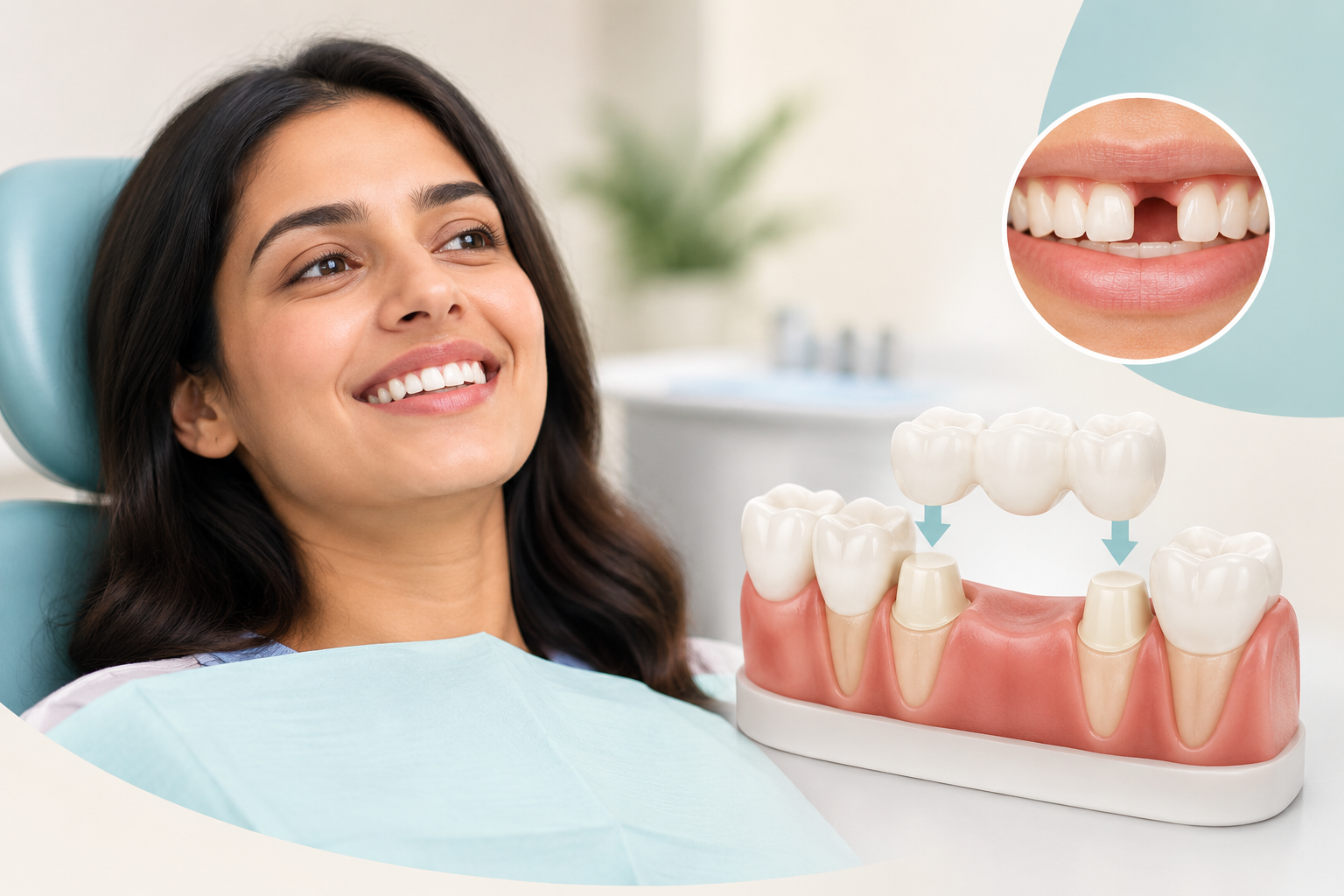
Losing a tooth can affect more than the appearance of your smile. Depending on where the gap is located, it may make chewing uncomfortable, affect speech, or allow nearby teeth to shift over time. Bridges Dentistry Treatment in HSR Layout may be considered when a fixed replacement is appropriate for the patient’s dental condition.
What Is a Dental Bridge?
A dental bridge is a fixed restoration designed to replace one or more missing teeth. It generally consists of an artificial tooth that fills the gap and is supported by nearby teeth or dental implants, depending on the type of bridge.
Unlike a removable denture, a conventional bridge stays in place once it has been fitted. It is designed to restore the appearance and function of the missing tooth while blending with the surrounding teeth.
The suitable bridge design depends on factors such as the location of the missing tooth, the condition of the neighbouring teeth, gum health, and the patient’s bite.
When May a Dental Bridge Be Considered?
A dental bridge may be an option when a patient has one or more missing teeth and suitable supporting structures are available.
Your dentist may consider a bridge when:
- A tooth has been lost because of decay, injury, or another dental problem.
- The neighbouring teeth are healthy and strong enough to provide support.
- The gums are healthy or can be treated before restoration.
- The patient prefers a fixed tooth-replacement option.
- The gap is affecting chewing, speech, or smile appearance.
For patients looking for Dental Bridges for Teeth in HSR Layout, a dental examination is important before deciding whether this treatment is appropriate.
Why Should a Missing Tooth Be Replaced?
A missing tooth can sometimes seem like a minor concern, especially when it is not visible when you smile. However, leaving a gap may affect the way your remaining teeth function.
Depending on the location of the missing tooth, neighbouring teeth can gradually move toward the empty space. This may affect the bite and make cleaning certain areas more difficult. A missing tooth can also reduce chewing efficiency.
Replacing the missing tooth can help restore dental function and maintain a more balanced appearance.
What Does the Dentist Check Before Treatment?
Not every missing tooth requires the same type of restoration. Before recommending Bridges Dentistry Treatment in HSR Layout, your dentist may assess:
- The condition of the teeth surrounding the gap
- Gum health
- The patient’s bite
- The size and location of the missing-tooth space
- Existing fillings, crowns, or other restorations
- Overall oral health
If decay, gum disease, or another dental issue is present, it may need to be addressed before bridge treatment.
This evaluation helps the dentist determine whether the supporting teeth can safely accommodate the planned restoration.
What Are the Different Types of Dental Bridges?
Dental bridges are available in different designs. The choice depends on the patient’s dental condition and the location of the missing tooth.
Traditional bridges are supported by prepared teeth on either side of the gap. Cantilever bridges may be considered when support is available on only one side. Maryland bridges use a different attachment design and may be suitable in selected situations. Implant-supported bridges are supported by dental implants rather than relying entirely on natural teeth.
Your dentist can explain which design may be suitable after examining your teeth and gums.
How Is Dental Bridge Treatment Performed?
The treatment process depends on the type of bridge selected. For a conventional bridge, the supporting teeth may first be prepared to create space for the restoration.
Your dentist may then take impressions or digital records of your teeth. A temporary restoration may be provided while the permanent bridge is being prepared.
Once the final bridge is ready, it is checked for fit, appearance, and bite. Any necessary adjustments are made before the restoration is secured.
Patients considering Dental Bridges for Teeth in HSR Layout can discuss the expected treatment steps during their consultation at Dr. SS Dental Care.
How Should You Care for a Dental Bridge?
A dental bridge requires regular oral care. Brush your teeth twice daily and clean around and underneath the bridge as recommended by your dentist. Depending on the bridge design, special flossing methods or cleaning aids may be useful.
Avoiding habits such as chewing extremely hard objects can also help protect the restoration. Regular dental check-ups allow your dentist to monitor the bridge, supporting teeth, and gums.
Why Choose Professional Dental Evaluation?
Choosing a tooth-replacement option should be based on your individual oral health rather than simply the appearance of the gap. Your dentist can assess the supporting teeth, gums, bite, and overall condition before recommending an appropriate treatment.
At Dr. SS Dental Care, Dr. Shahul Hameed Sattar, a Prosthodontist and Implantologist, provides restorative dental care with a focus on individual treatment planning.
You can learn more about the treatment through the dental bridge treatment page.
Conclusion
A dental bridge can be a suitable fixed option for replacing a missing tooth in carefully selected cases. It can help restore chewing function, improve smile appearance, and fill an unwanted gap.
However, suitability depends on factors such as gum health, supporting teeth, bite, and the location of the missing tooth. A professional dental examination can help determine whether a bridge is appropriate for you.
Frequently Asked Questions
1. Can a dental bridge replace one missing tooth?
Yes, a dental bridge can replace a single missing tooth by filling the gap with an artificial tooth. A conventional bridge is usually supported by the healthy teeth on either side of the missing tooth.
2. Does getting a dental bridge involve surgery?
A conventional dental bridge usually does not require implant surgery. The exact procedure depends on the type of dental bridge recommended for your needs.
3. How long does dental bridge treatment take?
Dental bridge treatment may take more than one dental visit, depending on the type of bridge, preparation required, and individual oral health. Your dentist will examine the missing tooth area and provide a personalized treatment timeline.
4. Is a dental bridge permanent?
A dental bridge is a fixed tooth replacement and is not normally removed by the patient. Its durability depends on factors such as oral hygiene, bite pressure, the condition of supporting teeth, and regular dental check-ups.
5. How can I maintain my dental bridge?
Maintaining good oral hygiene is important for keeping a dental bridge clean and supporting the health of the surrounding teeth and gums. Brush twice daily, clean underneath and around the bridge as advised by your dentist, and attend regular dental check-ups.